• 20/09/22
(originally written on 4 Sep, edited till published)
Currently about 2/3 done with my 15-hr long flight. Still have one
layover and another 6 hours after that. My butt is hurting so bad and
I'm bored out of my mind so I thought I would take the time to document
a project that I embarked on during the first half of June.
Per the closing remarks of
this post, I was itching to learn React to create a SPA (single page app). At
the same time I wanted to learn how to do API calls and work with real,
dynamic data rather than static, manually-inputted data. I had also been
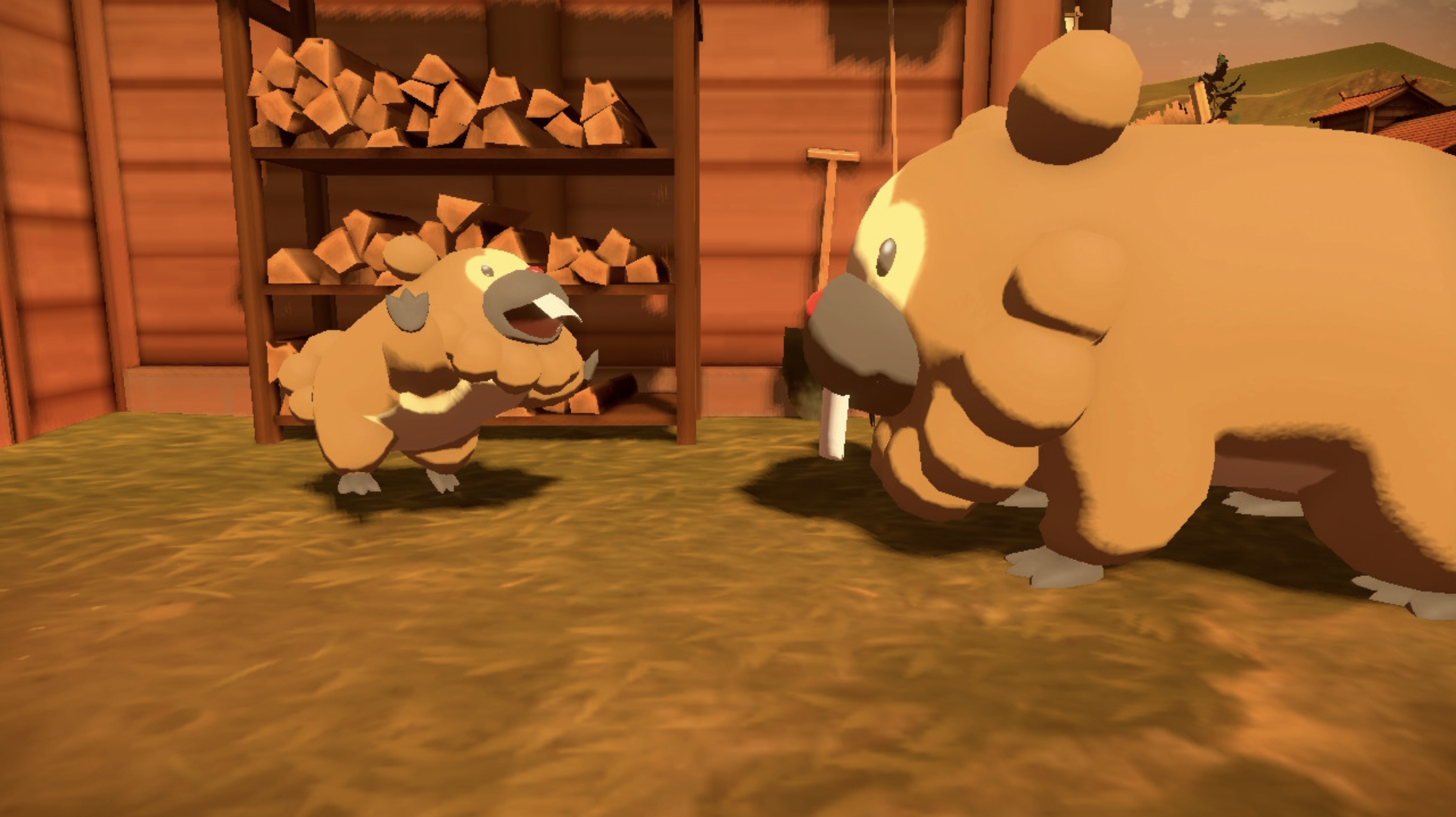
playing Pokémon Legends: Arceus a lot then (one of their better releases
of late, especially after the lukewarm release of SwSh, but I digress).
I found myself once again engrossed in the background and
characteristics of individual pokemon. So I knew that I wanted my React
project to somehow tie in with my rekindled affection for Pokémon. At
the same time I was searching online for API projects for beginners and
stumbled upon PokéAPI, which happens to be quite a popular choice for
newbies, a "baby's first API call" if you will. So I decided, why not
use it to create a pseudo-Pokédex of sorts?
Since this was going to be my first React project, my focus was on
simplicity; I wanted to capture just the key aspects of the Pokémon
itself (such as its typing(s), stats and abilities, but I eventually
went on to include more info, like its evolution line, Pokédex entry,
other intersting trivia etc. once I got more comfortable with React, but
more on that later). While doing so, I wanted to design a clean user
interface while eliminating most of the cruft that comes with popular
encyclopaedias like Bulbapedia1
and Serebii. Essentially a very simple, pared back Pokédex.
I really should have documented more (or at all) during the process of
building the app because I am struggling to recall the exact steps I
took. But I will try my best.
I'm also jumping ahead here, but (thank you past self) I archived
earlier iterations of the site on Netlify; if you're interested in
viewing them, you can do so here:
- https://pokesearch-simple-v1.netlify.app/ (super barebones, just testing the api call for grovyle)
- https://pokesearch-simple-v2.netlify.app/ (added ability descriptions & evolution line)
- https://pokesearch-simple-v3.netlify.app/ (added ability to go to next and previous pokemon in the dex with buttons in the nav bar)
- https://pokesearch-simple-v4.netlify.app/ (added moves learned and fun facts)
- https://pokesearch-simple-v5.netlify.app/ (added information modal)
- https://pokesearch-simple-v6.netlify.app/ (changed fonts and fixed edge cases... try searching for ho-oh in v5 vs. v6)
I used the React tutorial from Scrimba for most of the process, which
came in really handy especially with hooks like useState and useEffect.
Still not really good at those, but definitely a lot more familiar than
before.
Anyway. I had decided on these features to be implemented in the
project:
- Stats
- Typing
- Abilities
- Evolutionary line
- Pokédex entry
- Moveset
- Fun facts
- Competitive usage
For the most part, it was easy enough using 'axios get' to pull in the stats, typing, abilities etc. of each Pokémon from PokéAPI. I just had to think about how to present them in a neat manner. And to make it all work in a relatively seamless manner (switching between views, making sure data is passed and updated correctly with changes, etc.). I describe a few of the hurdles I ran into below.

Displaying evolutionary lines was particularly challenging:
- Some Pokémon had only one evolution.
- Some had two evolutions.
- Others had split evolutions (e.g. Slowpoke evolving into either Slowking or Slowbro), and even multiple evolutions (e.g. Eevee into Vaporean, Espeon, Flareon, Leafeon etc.).
- The way that PokéAPI stores these evolutions in their database was also quite confusing/convoluted. It would be difficult to implement a modular view of evolutions with this in mind.
- The only solution I saw at the time was to create custom views for such edge cases. But there are too many of such edge cases, which is why I went with the simpler approach of displaying at most 3 stages. For that reason, Eevee only appears to evolve into Vaporeon with this implementation. Unfortunate, but I wanted to prioritise my time on other features.
Searching for Pokémon by name was also quite the struggle for a few reasons:
- No “smart search” or “auto completion” was implemented. The name had to be written perfectly. I looked into how to improve this, but decided to keep it simple for now.
- Some Pokémon have different forms, and the way that PokéAPI stores these different forms makes it slightly more challenging to find them. For example, searching “Giratina” would result in an error stating that the Pokémon could not be found because the API records Giratina differently. There isn't one "Giratina" entry but two: “Giratina-altered” and “Giratina-origin”, recorded as separate entities, but I doubt most people would know to search for those. In a perfect word, searching Giratina would simply show both forms on the same page complete with their respective info. I managed to resolve this, somewhat hackily, by ignoring the form names after each hyphen “-“ and serving the first default form in the database, but then I remembered that Pokémon like Ho-oh, who has no alternate form, exists, so these were the edge cases that I had to work around.
- To aid in the discovery of alternate forms for Pokémon, I chose to feature them in the “fun facts” section if a Pokemon species had them, and encouraged users to search them up. Just a small alleviation of what is otherwise a rather clunky implementation of searching.
These are at least the more interesting hurdles that I faced. The rest simply involved me getting comfortable with React and JSX syntax, executing the layout I had in mind, and making it all work. Again, I wish I'd documented more...
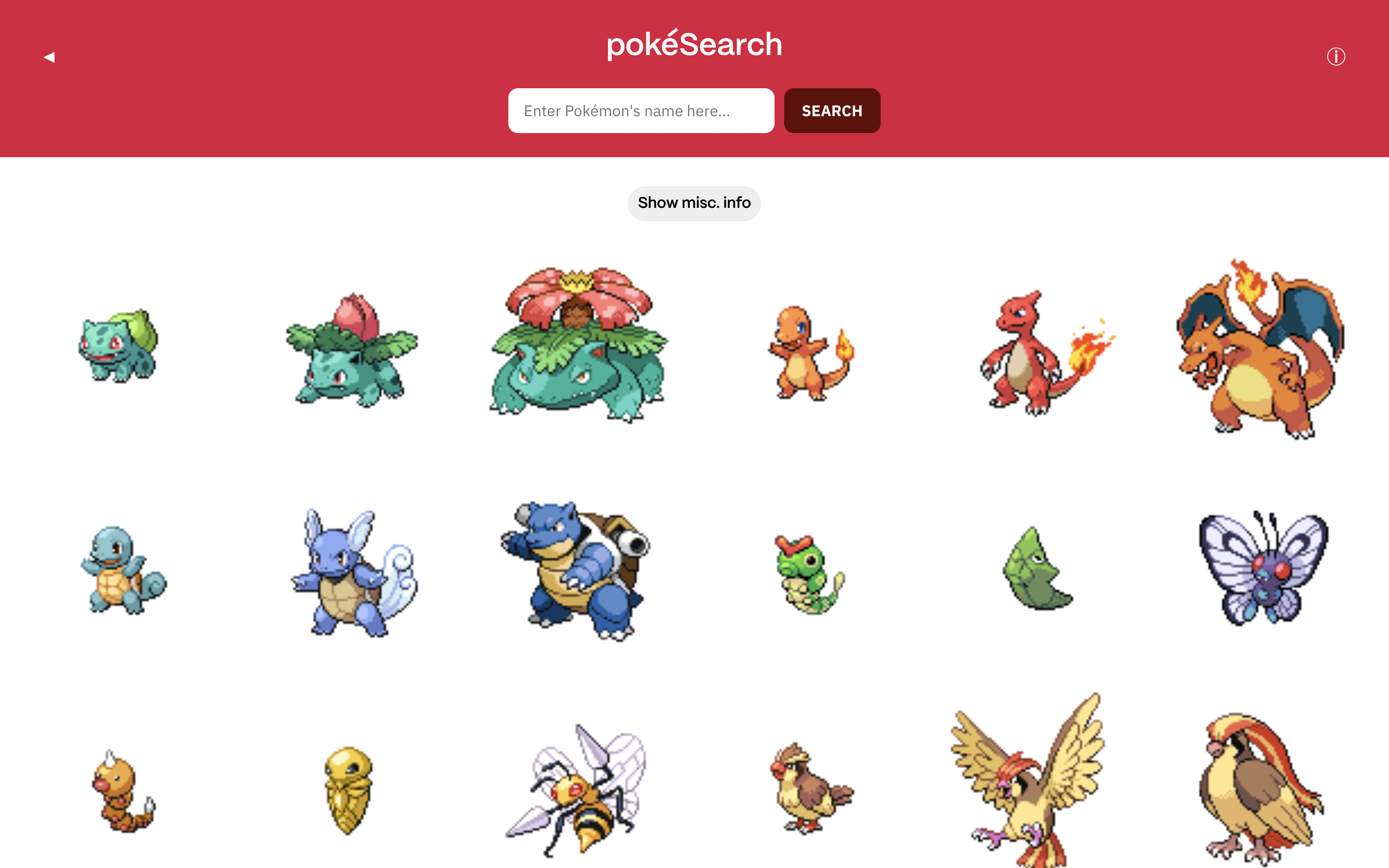
This is probably my favourite section of the project, which is basically
a list view of all 898 pokemon released thus far. By default, it also
presents the Pokémon's Pokédex number, name, sprite and typing(s), but
there is a toggle to hide all text/misc. info. So what you get is a
long, scrollable list of colourful Pokemon sprites. The viewport
dynamically resizes according to screen size so it remains a beautiful
encyclopedia of both official and unofficial (gen 6 onwards) sprites no
matter the device. It's not perfect, however; the initial plan was to
have pagination for this section, to reduce loading times and eliminate
long scrolling, but keeping track of it in tandem with the “main”
Pokémon view was a lot more than what I could handle at the time.
If you refer back to the list above, all but one of the features were
successfully implemented; the last one I wanted to incorporate was a
small section outlining the Pokémon's usage and viability in competitive
play (from the likes of VGC and Smogon), but I could not access the
endpoints of what few relevant APIs were publicly available due to a
CORS error. After hours of debugging I still wasn't able to resolve this
unfortunately, but I plan to continue looking into this in the future.
Still, overall, I'm pretty happy with how this project turned out, so
much so that I decided to get a custom domain for it. It's now live on
pokesearch.xyz.

This project definitely went a lot further than how I first imagined
it—I was constantly excited, envisioning and implementing new features,
pushing my ideas as far as I could with respect to how much I learnt up
to that point. It could use a lot more polish, but I had fun
experimenting with React and building interfaces with CSS. It’s nice to
just put something out there, especially something that I would
personally use myself for quick lookups of Pokémon stats/abilities or to
read the nifty Pokédex entries. I surprised myself with just how far
interest can go; if you're really interested, curious or passionate
about something, there's this real inclination to dig deep and go for
it.
After this project, I went on to build my
personal portfolio, switching from Netlify to Next.js in the process, and worked with
libraries like Framer motion to create more dynamic pages (re: my
previous post) but of course that’s for another time. Maybe I'll write
about it when I fly back from the US in a few months time. Because it
seems like the only times I feel like documenting these things for an
online blog post that virtually nobody reads is when I have absolutely
nothing else to do. A bad habit for sure. We’ll see.
Other rough notes on PokéAPI:
- the data is not completely up to date, with some missing pokedex entries or move descriptions. i recall the last somewhat minor update to the API being in april.
- the data is also sometimes oddly organised (simplified example: each pokemon is an object that contains an array of ability descriptions in different languages; i couldn't consistently pull the first, second or third item from the array to get the ability description in english because they were seemingly randomly ordered; somewhat thankfully each ability description was an object itself that contained a string that determined its language, like EN for english and ES for spanish, so i just had to traverse the entire array until i found the english ability description. i imagine that this would be much easier with graphql or something
- speaking of which, there is a graphql version of the api available, which is only in beta, but it should make querying for Pokémon a lot easier / streamlined and maybe even faster. GraphQL is definitely on my list of important things to learn.
But it's hard to imagine a more comprehensive dataset of Pokemon that is publicly available. And I really appreciate that it exists! APIs are so cool.
1. Coincidentally, Bulbapedia was broken for a large part of the development period of this project, so there really wasn't a better time to start the project. ↩︎
❉︎ return to notes ⁖ return to main